Research Areas & Expertise
My research combines mathematical optimization, machine learning, scientific computing, and simulation to develop models and control algorithms for complex systems. My work has primarily focused on transportation and mobility, including fleet optimization, traffic simulation, and connected autonomous vehicles, while the underlying computational methods are applicable across different domains.
Methodological Expertise
For a complete list of publications, see Publications. For implementation details and research software, see Projects.
Core Research Areas
01. Mobility Services & Optimization
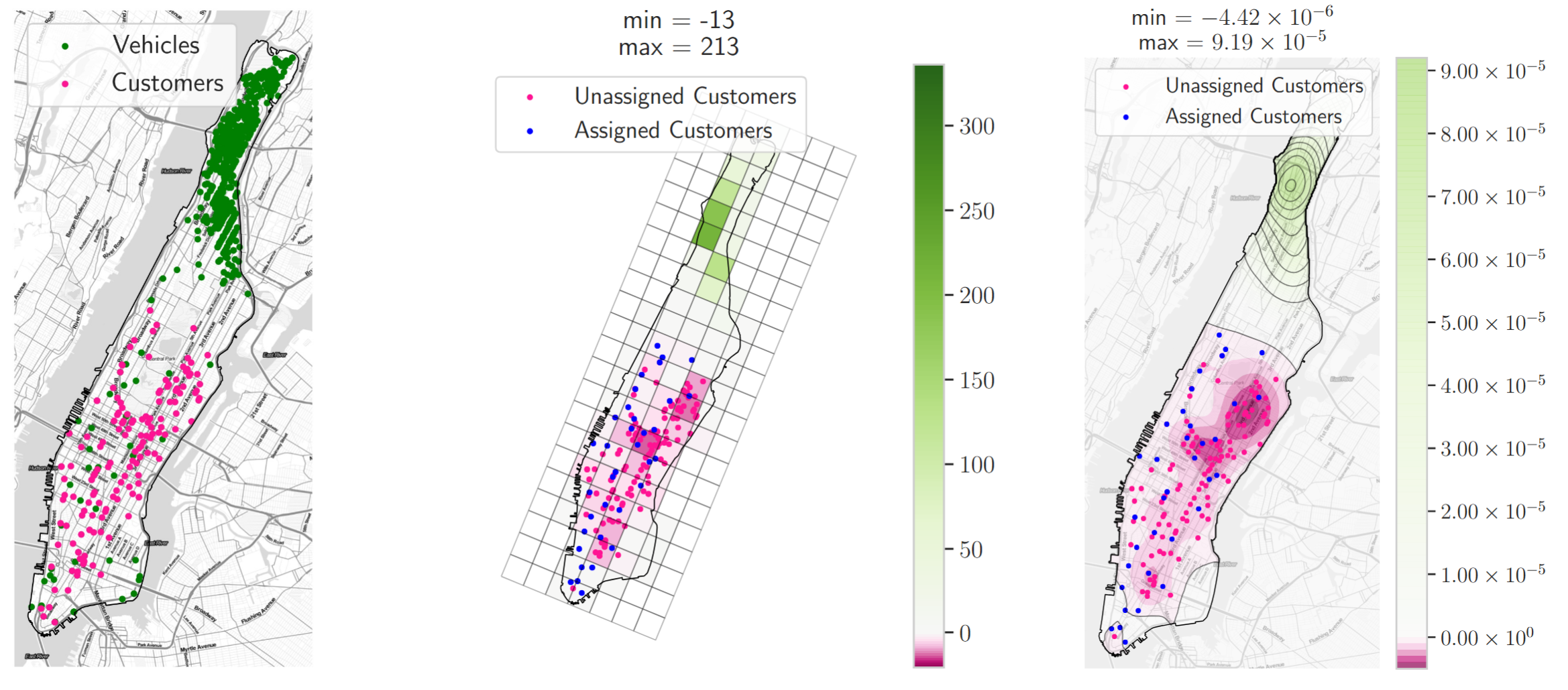
I investigate how shared and on-demand mobility services can be operated efficiently. My contributions include methods for dynamic ride-request assignment, fleet repositioning, learning-assisted optimization, and electric-vehicle charging strategies. I have also developed fleet-control methods for integrating passenger transport with last-mile parcel deliveries.
Selected publications
- Density Based Distribution Model for Repositioning Strategies of Ride Hailing Services (2021)
- Neural Network-Based Metaheuristic Parameterization for Vehicle Matching (2019)
- Asynchronous Adaptive Large Neighborhood Search for Dynamic Ride-Hailing Matching (2019)
- Charge Point Search Policies for EVs (2022)
Related software and projects: FleetPy · CONDUCTOR · München elektrisiert · BMW patent applications
02. Simulation Frameworks
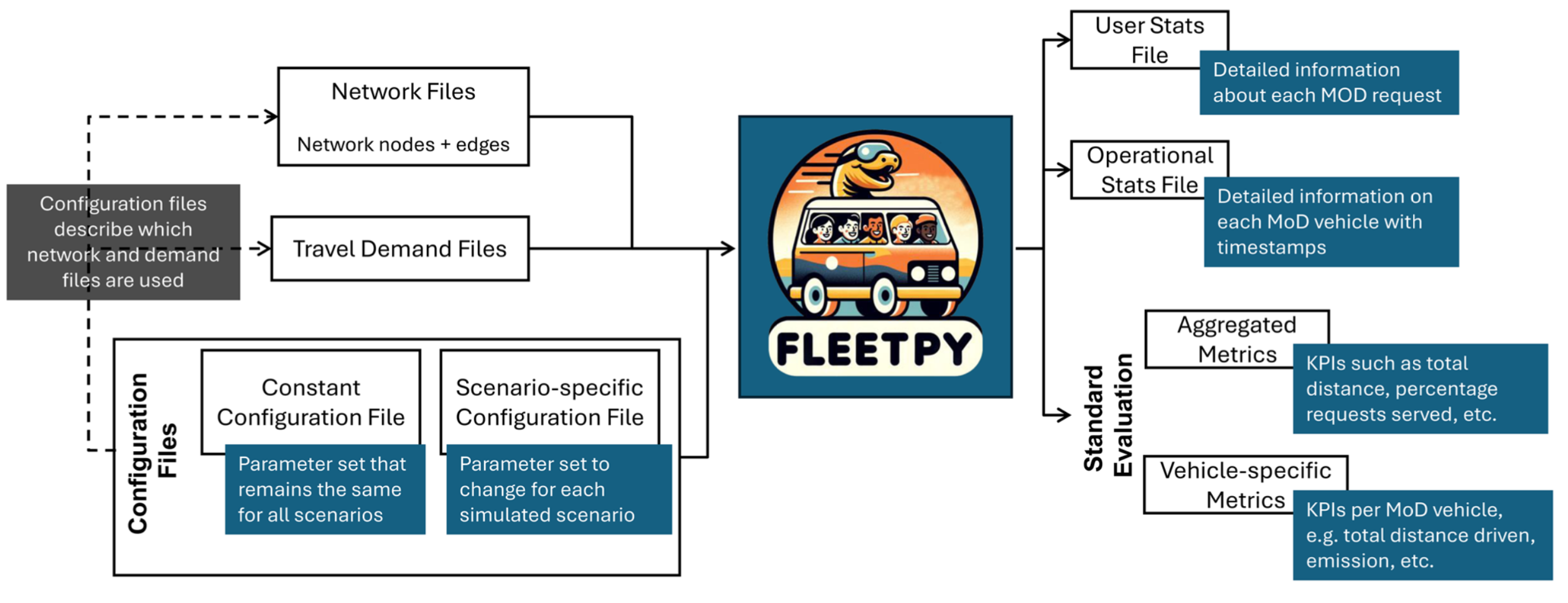
A central part of my work is building modular simulation frameworks for the analysis of complex mobility systems. As a founding co-developer of FleetPy, I contributed to an open-source platform for mobility-on-demand research. I also developed LaneFreeDrive, a reusable library for testing lane-free traffic control methods. My modeling work includes data-driven representation of travel times and reproducible simulation-based comparisons.
Selected publications
- FleetPy: An Open Source Simulator for Reproducible Research on Mobility-on-Demand Services (2026)
- Data-Driven Spatio-Temporal Scaling of Travel Times for AMoD Simulations (2023)
Related software: FleetPy · LaneFreeDrive
03. Connected & Autonomous Traffic Systems
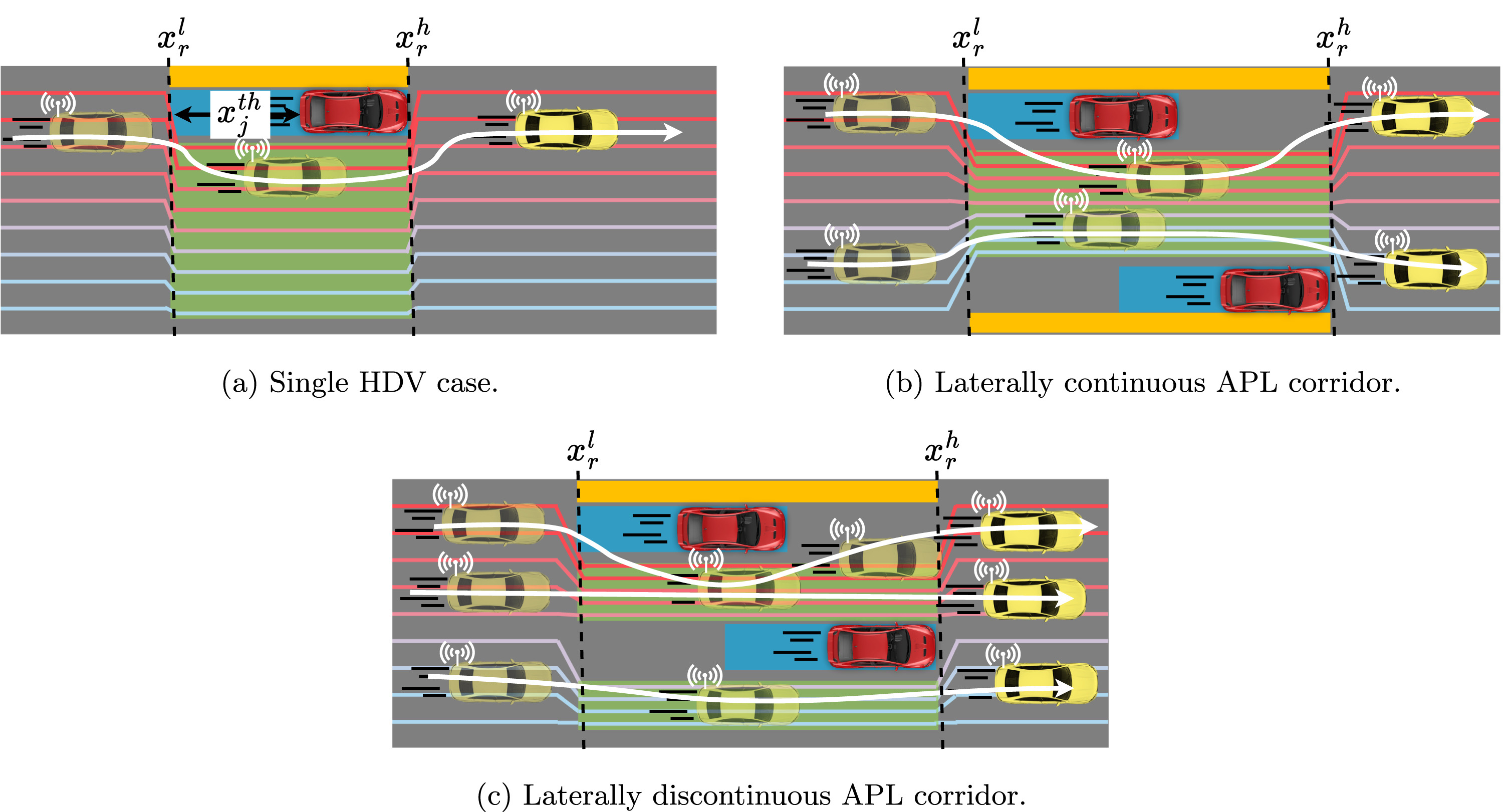
I study traffic systems in which connected autonomous vehicles (CAVs) and human-driven vehicles interact. My recent research examines the performance of lane-free traffic under mixed vehicle populations using microscopic simulation. I have also contributed to the conceptual design of driving-simulator studies investigating human experience and interaction in lane-free traffic scenarios.
Selected publications
- Can Human Drivers and Connected Autonomous Vehicles Co-exist in Lane-Free Traffic? (2025)
- Investigating Lane-Free Traffic with a Dynamic Driving Simulator (2023)
- Lane-Free Traffic: History and State of the Art (2022)
Related software and projects: LaneFreeDrive · SAVeNoW
04. Adaptive Mobility Digital Twins & Agentic AI
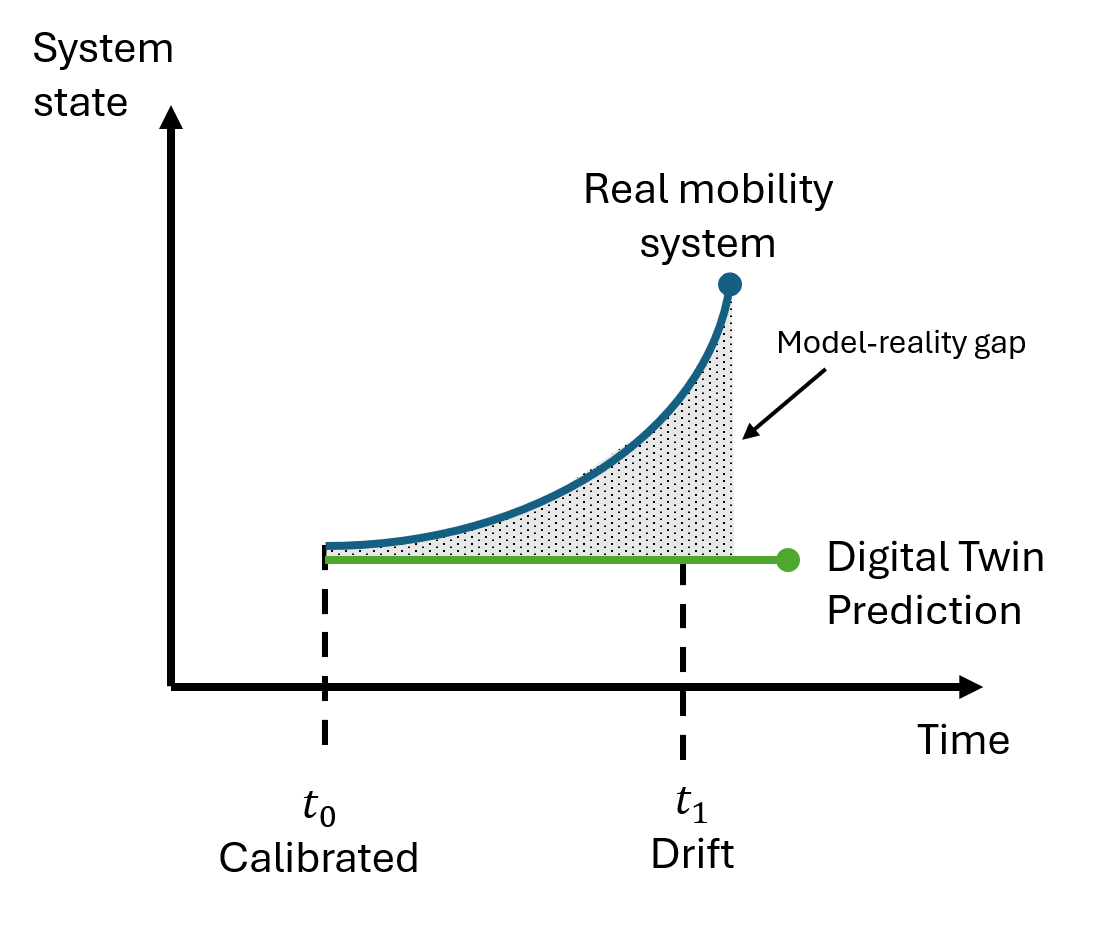
I am interested in how AI-assisted methods can help monitor, diagnose, and adapt simulation-based digital twins as operating conditions change. This is an emerging research direction, building on my earlier work in simulation, optimization, and multi-agent mobility systems.