München elektrisiert (Mᵉ)
EV charging strategies and public charging infrastructure for electric ride-pooling, evaluated using FleetPy in Munich.
Project overview
München elektrisiert (Mᵉ) was a publicly funded research and infrastructure project (2018–2022) to support electric mobility in Munich through improved charging infrastructure and smarter charging strategies. At the Technical University of Munich (TUM), Chair of Traffic Engineering and Control, I contributed to two research work packages, using and extending the open-source FleetPy simulation framework to investigate how public charging infrastructure could be used more efficiently.
My focus: agent-based simulation, charging-point search and reservation policies, electric fleet operation, and assessment of charging infrastructure utilization.
1. Charging-point search and reservation strategies
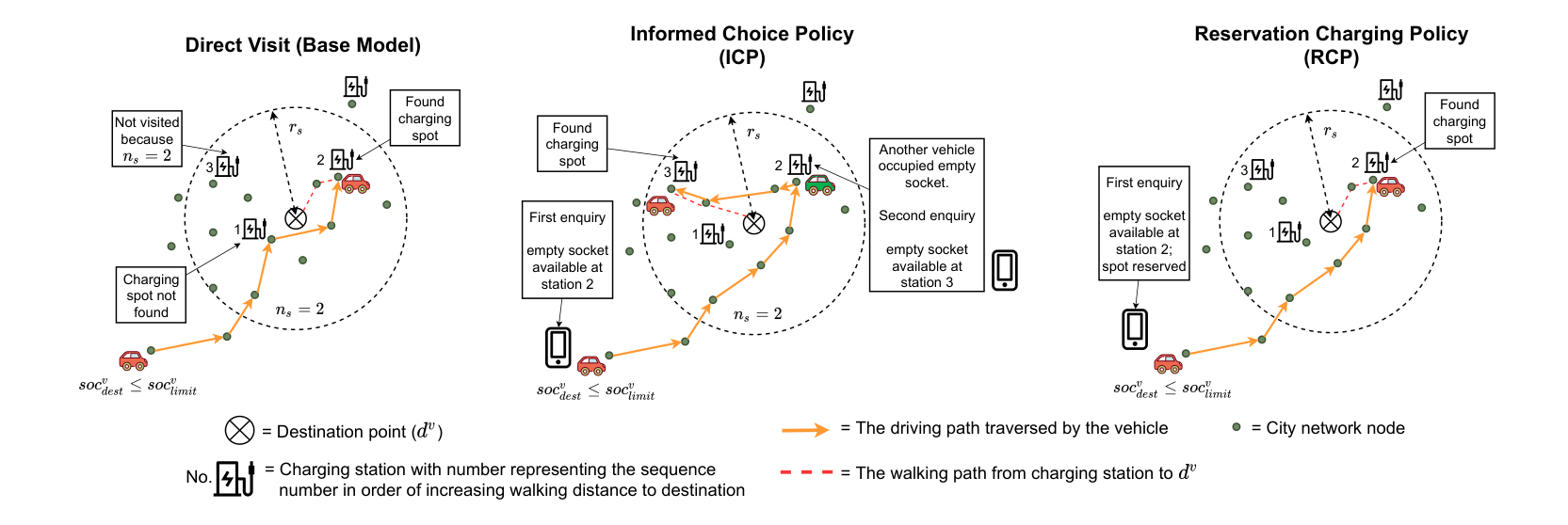
I investigated how drivers could reduce unnecessary detours when searching for public EV chargers. Using a modified version of FleetPy for private and commercial vehicle trips, we compared three strategies:
- Direct search: Drivers visit nearby charging stations to look for a free point.
- Informed search: Drivers use real-time charger availability information.
- Reservation: Drivers can reserve an available charging point before arrival.
The simulations used Munich’s road network, public charging infrastructure, and synthetic daily EV trips. We measured additional driving distance, walking distance, charging-station utilization, and search success rates.
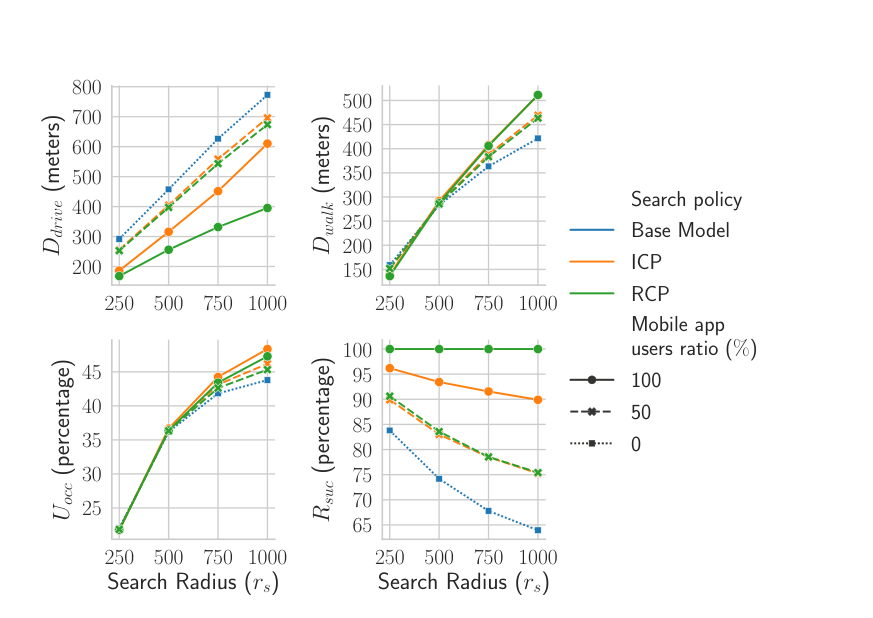
Key simulation results:
With a 500 m search radius and 100% adoption, informed search reduced the additional distance driven to find charging by 54.4%, and reservation-based search by 69.0%, relative to direct search. At 50% adoption the respective reductions were 27.3% and 30.4%. These were model-based estimates under the study’s assumptions, not observed reductions in citywide traffic.
My contribution:
I was the main contributor of this research. I developed and evaluated FleetPy-based charging-point search scenarios and their operational implications.
2. Public charging for electric ride-pooling fleets
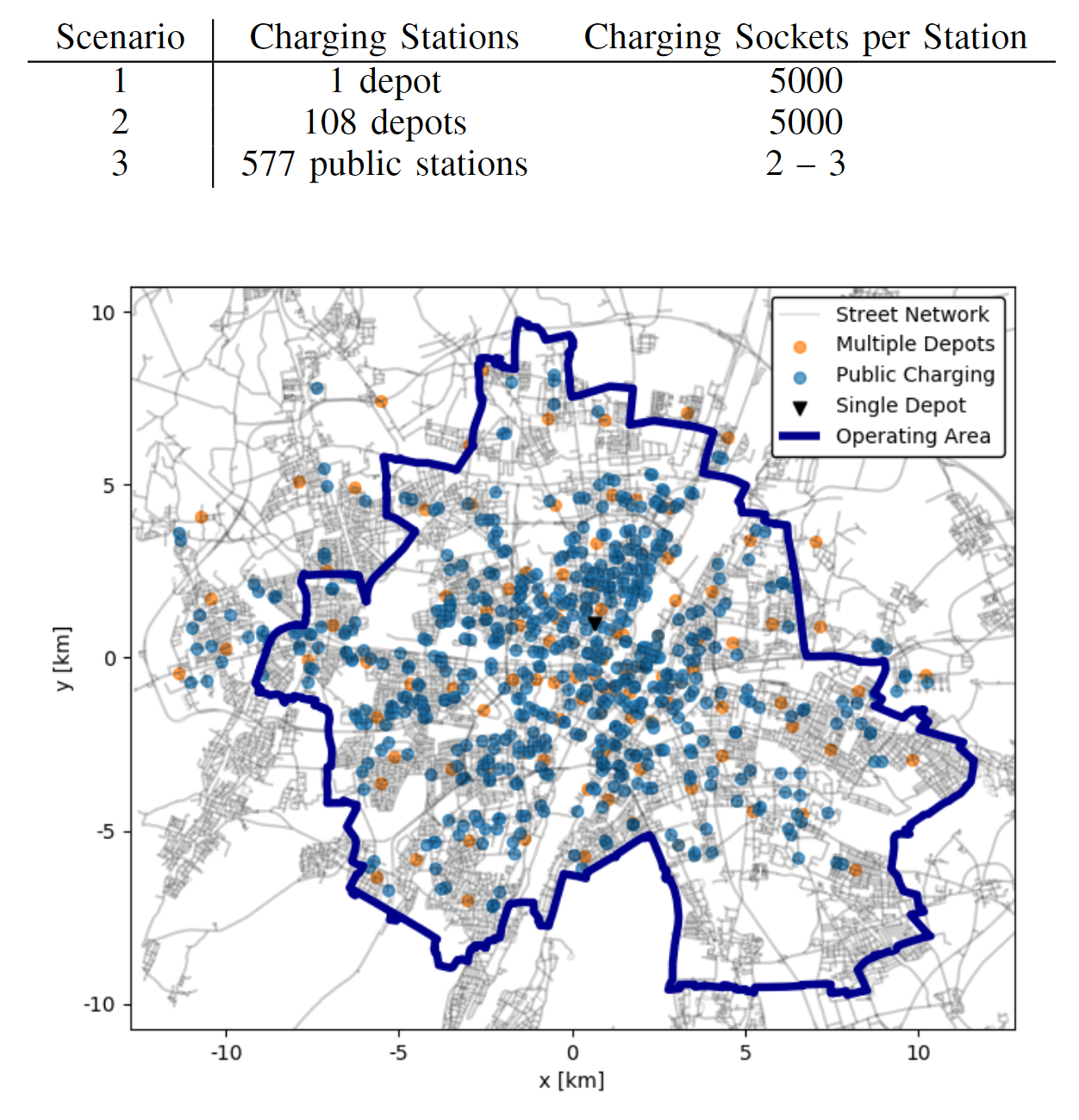
I also contributed to a collaborative study of electric mobility-on-demand (MoD) and ride-pooling fleets using public chargers shared with private vehicles. This work extended FleetPy’s charging simulation to represent station availability, charger bookings, vehicle state of charge, and charging-related repositioning journeys.
The study compared three charging arrangements in Munich: a single operator depot, multiple operator depots, and existing public charging stations. Public-charger occupancy was informed by empirical private-vehicle charging records. FleetPy was used to assess passenger level of service, charging-related empty mileage, and public-infrastructure utilization.
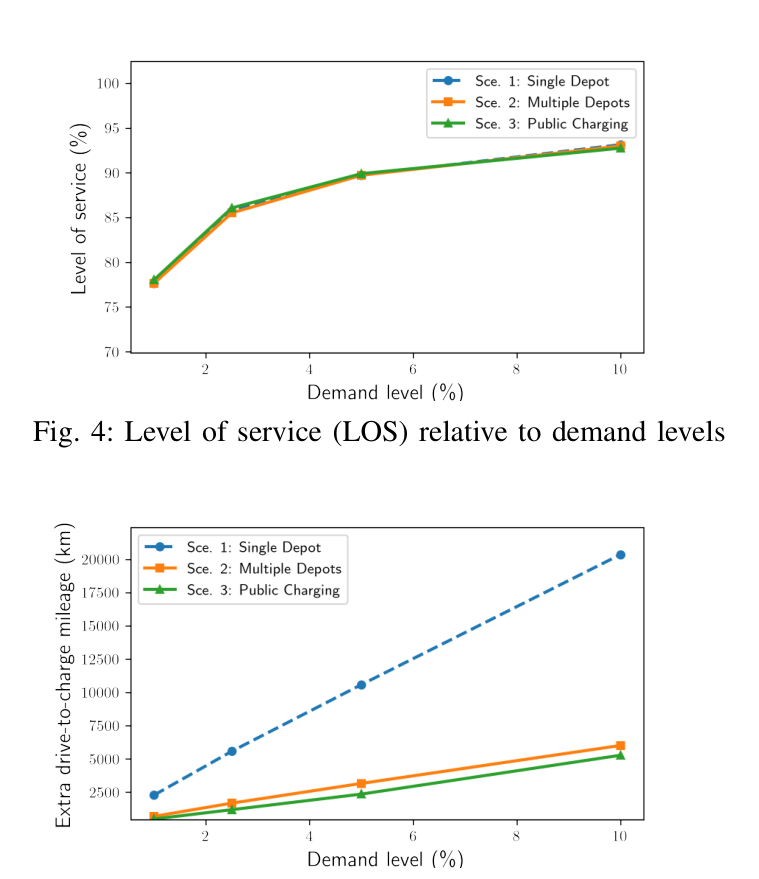
Key simulation results:
Using public charging infrastructure maintained similar passenger service levels to depot-only scenarios while requiring substantially less extra driving for charging than a single central depot. The results suggest an opportunity to use public charging infrastructure without building numerous dedicated depots, subject to local charging demand and availability.
My contribution:
I contributed as a co-author and FleetPy developer to this collaborative simulation study. I further refined the class structure I developed for charge point search research was further extended and incorporated into FleetPy for this study.
Publications and links
- Syed, A. A., Fischer, M., Hardt, C., & Bogenberger, K. (2022). Charge Point Search Policies for EVs — Minimizing the Cruise for Juice. IEEE ITSC 2022.
- Zhang, Y., Engelhardt, R., Syed, A.-A., Dandl, F., Hardt, C., & Bogenberger, K. (2022). Simulating Charging Processes of Mobility-On-Demand Services at Public Infrastructure: Can Operators Complement Each Other?. IEEE ITSC 2022.
- Official TUM project description · FleetPy on GitHub
Funding: German Federal Ministry for Economic Affairs and Energy (BMWi), project München elektrisiert, grant 01MZ18010C. Figure credits: IEEE ITSC 2022 papers linked above; reuse of the reproduced figures on a public website may require permission from the rights holder.