CONDUCTOR
Ride–parcel pooling for demand-responsive passenger transport and last-mile deliveries in Madrid.
Overview
CONDUCTOR (Fleet and traffic management systems for conducting future cooperative mobility) was an EU Horizon Europe research project (2022–2025) developing advanced traffic and fleet-management approaches for passengers and goods. I represented the Technical University of Munich (TUM) on the project, responsible for TUM’s technical contribution to Use Case 3: Urban Logistics in Madrid. This use case investigated whether demand-responsive ride-pooling fleets could also perform last-mile parcel deliveries.
The central question was whether passenger and parcel requests could share the same vehicles and routes while maintaining the quality of passenger service and making more effective use of fleet capacity.
My role and contributions
I took responsibility for FleetPy-based technical work, from developing the fleet-control algorithm to preparing and evaluating the Madrid simulation case study. My work included:
- Algorithm development: Designed and implemented a ride–parcel–pooling fleet-control algorithm in FleetPy, enabling shared vehicles to transport ride-pooling passengers and deliver last-mile parcels. Passenger service was prioritised while coordinating parcel pickups and deliveries within vehicle schedules.
- Delivery time-window functionality: Developed a method to calculate and announce delivery time windows for parcels, allowing delivery commitments to be represented alongside passenger-service requirements.
- Simulation integration: Prepared the Madrid case study in FleetPy, integrating passenger-request data generated by Nommon and realistic network travel-time inputs from Aimsun Next’s macroscopic Madrid traffic model, provided with support from Aimsun.
- Performance evaluation: Used the simulation setup to test ride–parcel–pooling strategies under different fleet sizes and demand conditions, examining passenger service, parcel deliveries, fleet utilisation and vehicle travel.
I carried out TUM’s technical contribution independently, while collaborating with the project’s other partners on demand data, network modelling and the wider use-case evaluation.
Approach and case study
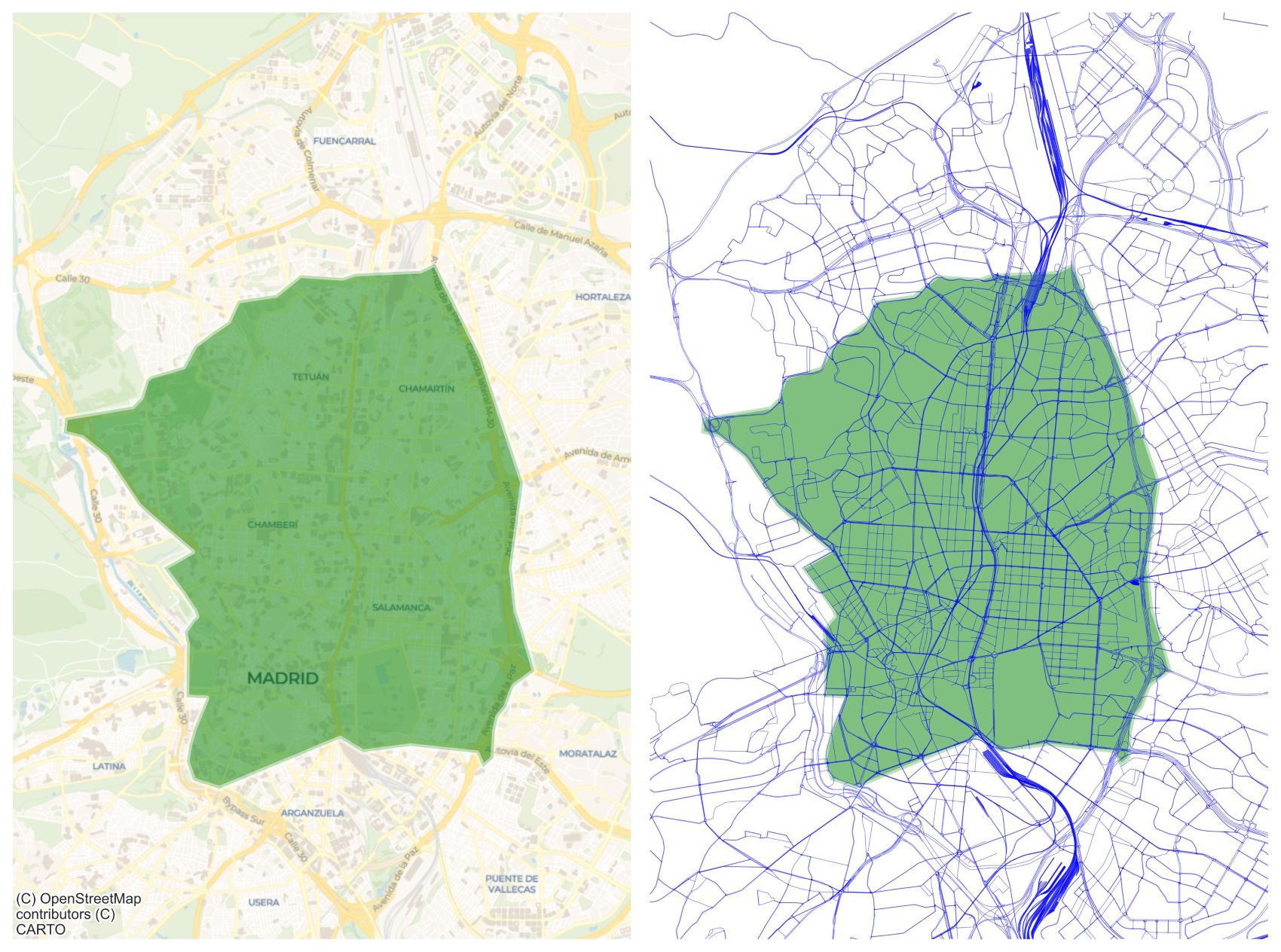
The study focused on an inner-city area of Madrid. The consortium explored different degrees of coordination, from inserting compatible parcel deliveries into passenger schedules to jointly planning passenger and parcel operations. Passenger trips remained the priority when evaluating the integrated service.
Main components:
- Nommon: Passenger-demand modelling and input data for the Madrid experiments.
- TUM / FleetPy: Simulation and fleet-control algorithms for combined passenger and parcel operations.
- Aimsun: Madrid network modelling and macroscopic traffic-derived travel-time information.
Simulation Results and Impact
Using the ride–parcel–pooling algorithm I developed in FleetPy, I performed simulations for the Madrid case study:
- 2023 demand: Reduced total travel distance by 2%, CO₂ emissions by 5%, and increased fleet utilization by 4.3%.
- 2027 projected demand: Reduced travel distance by 1.5% and CO₂ emissions by 3%.
- Passenger service: Maintained passenger demand coverage at 95% (2023) and 97% (2027), while serving 72.5% and 84% of parcel demand, respectively.
Project links and public reports
- CONDUCTOR — official project website
- Madrid Urban Logistics (Use Case 3)
- TUM project description
- CONDUCTOR D5.4 — Public report on impact assessment of use cases, Section 4.4
- FleetPy software
Funding: European Union Horizon Europe, Grant Agreement No. 101077049. Project period: November 2022–October 2025.